MENTAL HEALTH MYTHS & FACTS

The Mind Body Connection
MENTAL HEALTH MYTHS & FACTS

Why Gen Z Gets Mental Health Wrong: Ignoring the Mind Body Connection

Written by Dr. Sakshi (MBBS, MD Psychiatry) Psychiatrist | Mental Health Expert If there’s one thing I’ve observed in my clinical practice with Gen Z patients, it’s this: they deeply care about mental health, but often misunderstand what true healing looks like. Social media has made therapy trendy and mental health discussions more open — which is a great start. But somewhere in this digital whirlwind, the ancient truth about the Mind Body Connection has been lost. Let’s talk about why understanding the Mind Body Connection is not just “good to know” — it’s essential for Gen Z to truly thrive The Modern Mental Health Misconception Today, “mental health” is a buzzword — and I’m grateful for that. Gen Z is vocal, aware, and actively seeking help more than any generation before. But here’s the catch: mental health is often reduced to just emotions and thoughts. They seek therapy, take medications (sometimes prematurely), talk about trauma — but completely overlook the physical foundation of the brain and body. In short: You can’t heal the mind if you neglect the body. This isn’t some wellness cliché. It’s neuroscience, physiology, and psychiatry all in agreement — your mental and physical health are deeply intertwined. Understanding the Mind Body Connection The Mind Body Connection means that your emotional and psychological health is deeply influenced by your physical well-being — and vice versa. It’s not a new-age idea. It’s biology. Chronic stress affects your immune system. Poor diet alters brain chemistry. Lack of sleep increases anxiety and impairs cognition. No physical movement? Your risk of depression skyrockets. This is why holistic mental health treatment always starts with the basics: your body. Gen Z and the Disconnect Why is Gen Z struggling with the mind and body connection? Well, they’ve grown up in an era of digital convenience. Screens replace sleep. Caffeine replaces rest. Fast food replaces real meals. Virtual relationships replace community bonding. They often prioritize mental “input” — podcasts, journaling, therapy — but forget about physical “output”: nutrition, movement, and recovery. Let’s Talk Science: What the Research Says Here’s what decades of research — and my years in clinical psychiatry — tell us: Diet and Mental Health What you eat literally becomes your brain chemistry. A diet high in sugar, trans fats, and processed carbs can lead to mood swings, brain fog, and long-term mental health issues. Nutritional psychiatry is now a valid discipline for a reason. Food’s rich in omega-3s, magnesium, zinc, probiotics, and antioxidants directly improve mood, reduce anxiety, and stabilize emotions. 👉 Tip: Start by minimizing junk food and including leafy greens, berries, seeds, and fermented foods. Sleep Hygiene Poor sleep hygiene is one of the biggest culprits I see in Gen Z clients. Binge-watching till 3 AM, irregular sleep cycles, and blue-light exposure affect the production of melatonin and serotonin — two essential mood regulators. Sleep isn’t just rest. It’s a biological reset button for your brain. 👉 Tip: Establish a consistent sleep-wake routine. Ditch screens 1 hour before bed. Keep your bedroom cool, dark, and gadget-free.  Physical Exercise and Depression We know this through hundreds of clinical trials: physical exercise is one of the most effective natural antidepressants. Even brisk walking 30 minutes a day can reduce depressive symptoms significantly. Exercise releases endorphins, increases brain-derived neurotrophic factor (BDNF), and improves dopamine regulation — all of which are critical for mental clarity and emotional balance. 👉 Tip: You don’t need a gym. Dance, yoga, walking, or any physical play counts. Just move your body daily. Mental Health Isn’t Just in the Mind Let me be honest. No amount of therapy, journaling, or medication can help fully unless we treat the body with the same respect we give the mind. This is the essence of holistic mental health care. When I create treatment plans for young adults, I look beyond just the diagnosis. I ask: Are you hydrated? Are you sleeping? Are you getting sunlight? What’s your screen time like? When did you last move your body? Because the truth is: Mental healing begins with physical nurturing. Digital Overload vs. Nervous System Regulation Gen Z is overstimulated. Notifications, news, social media, video games — it’s a constant barrage. This hyperstimulation dysregulates the nervous system and makes it harder for the brain to focus, rest, or self-soothe. Balancing this requires intentional nervous system regulation, including: Breathwork Mindful walks Journaling Cold showers Stretching Deep rest These are all alternatives to medication that I often recommend to my patients along with therapy or short-term pharmacological support, depending on severity. Bridging the Gap: How Gen Z Can Reconnect With the Body Here’s what I’d advise every young adult reading this: Start with awareness – Reflect on your body habits as much as your thoughts.Eat to support your brain – Choose whole foods, minimize ultra-processed meals.Fix your sleep hygiene – No shortcuts. Aim for 7-9 hours.Move daily – Doesn’t have to be intense. Just consistent.Reduce digital noise – Not everything deserves your attention.Try body-based practices – Yoga, dancing, walking barefoot, anything that reconnects you to your senses. A Psychiatrist’s Final Word Dear Gen Z, you’re not broken. You’re just disconnected — mostly from your own bodies. You have immense potential to transform your mental health, not just by scrolling through therapy quotes but by living in sync with your biology. The real revolution is not in another diagnosis, pill, or productivity hack — it’s in re-establishing the Mind Body Connection. In my practice, I’ve seen young adults completely shift their emotional resilience by just making foundational physical changes. Let’s not ignore the power of the body anymore. Your brain lives in it. Start there. Feeling Unmotivated or Mentally Drained? You’re not alone. Whether you’re Gen Z, a concerned parent, or an educator—mental health is a valid conversation.  Book an appointment with me and let’s understand your journey—together. 📍 Dr. Sakshi MBBS, MD (Psychiatry)  What is the mind-body connection? The mind-body connection refers to the way thoughts, emotions, beliefs, and attitudes can affect physical health—and

Medications
MENTAL HEALTH MYTHS & FACTS

Are Psychiatric Medications Overprescribed in Gen Z?

Written by Dr. Sakshi (MBBS, MD Psychiatry) Psychiatrist | Mental Health Expert As a practicing psychiatrist, I’ve often been asked — “Are we overprescribing psychiatric medications to Gen Z?” It’s a question that comes from a place of concern, confusion, and sometimes even fear. In the age of rising mental health awareness, we’re seeing more teens and young adults seeking psychiatric help than ever before. While that’s a positive shift, it has also sparked conversations around whether medications — particularly anxiety medication, ADHD medication, and other mental health medications — are being recommended too often and too quickly. Let’s explore this topic with evidence, empathy, and honesty. Gen Z: A Generation More Open About Mental Health Born between 1997 and 2012, Gen Z is the first generation that speaks about anxiety, depression, ADHD, and burnout without shame. They are digital natives, but also emotionally overloaded. With 24/7 exposure to academic pressure, climate dread, online validation, and hustle culture — it’s no surprise that they’re experiencing unprecedented psychological stress. This mental load has brought Gen Z into therapy rooms, psychiatric clinics, and wellness spaces. That’s a huge step forward. But it has also increased the prescription rates for mental health medications. The question is: are these medications being given too liberally? The Short Answer? It’s Complicated. In my experience, psychiatric medications are not the first solution I reach for. Every treatment begins with an in-depth evaluation, listening to the patient’s story, understanding their environment, and exploring non-pharmacological interventions. But there are times when anxiety medication, ADHD medication, or antidepressants are necessary — not because we’re trying to “quick fix” emotions, but because the neurochemical imbalance is real. The Truth About “over prescription” in Gen Z There are valid concerns about over prescription, but they must be unpacked in a balanced and contextual way: 1. More Diagnoses, More Awareness We’re diagnosing mental health conditions earlier because awareness and access have improved — not because Gen Z is “weaker.” 2. Lack of Access to Therapy A major reason medication is prescribed more often is the lack of affordable therapy. This raises the question, is therapy better than medication? Ideally, both works best together, but if therapy isn’t accessible, doctors may rely on medication for urgent stabilization. 3. The Rise of Self-Diagnosis Social media has led many Gen Z individuals to self-diagnose anxiety, ADHD, or mood disorders, and demand specific medications. This creates pressure on physicians and leads to confusion about proper treatment. 4. Time Constraints in Psychiatry Overloaded systems mean many professionals don’t have the luxury of 40-minute evaluations. In rushed settings, medications are sometimes prescribed without exploring alternatives to medication — something we must actively reform. What Counts as Over prescription? Over prescription doesn’t mean “more people are getting meds.” It means: The diagnosis was unclear Medication was given without full evaluation There was no follow-up or review It wasn’t paired with therapy or lifestyle intervention When these errors occur, yes — we risk overmedicating. But when a prescription follows clinical standards, it’s not overuse — it’s appropriate care. Anxiety Medication & ADHD Medication: When Are They Necessary? Anxiety medication (like SSRIs or benzodiazepines) and ADHD medication (such as methylphenidate or atomoxetine) are often misunderstood. These aren’t “happy pills” or “study enhancers.” They’re medications that address brain chemistry, reduce intrusive thoughts, and improve functioning — especially when symptoms are severe and persistent. I’ve worked with young patients who couldn’t attend school due to panic attacks or who felt chronically distracted and ashamed due to undiagnosed ADHD. For them, medication brought relief, clarity, and functionality. Mental Health Medications: Support, Not Substitution The goal of any mental health medication is not to dull emotions — it’s to help the brain stabilize so the patient can actually benefit from therapy, lifestyle changes, and social support. Think of medication as a bridge — not the destination. However, blind reliance on pills, without addressing root causes like trauma, unhealthy environments, or lack of emotional regulation, does no good. Are There Alternatives to Medication? Yes, Absolutely. For mild to moderate cases, or for those who are hesitant to begin with medications, I always offer alternatives to medication. These include: Cognitive Behavioral Therapy (CBT) Regular physical activity (especially aerobic exercise) Sleep hygiene and circadian rhythm stabilization Nutritional psychiatry (e.g., gut-brain health) Journaling and mindfulness Community support and structured routines These interventions, especially when personalized, can offer sustainable long-term benefits. Is Therapy Better Than Medication? Or Do They Work Together? It’s not a competition. The real question isn’t “is therapy better than medication?” but rather, “what combination works best for this unique individual?” In many cases: Medication treats the neurobiology (brain chemistry) Therapy treats the psychology (thought patterns, emotional triggers) For example, someone with major depression may need medication initially to reduce symptoms enough to even engage with therapy. So, no — therapy isn’t “better” than medication. And medication isn’t a “crutch.” Together, they can transform lives. How I Prescribe Medication Ethically: My Approach Before recommending any medication, here’s what I personally evaluate: Detailed psychological and medical assessment Understanding family, social, and academic context Identifying stressors and sleep patterns Screening for trauma and lifestyle factors Open conversation with the patient (and parents, if minor) Discussing alternatives to medication Setting clear expectations and follow-up plans No one should ever feel pushed or rushed into medication. It’s a shared, informed decision. Gen Z Deserves Empathy, Not Assumptions Labeling Gen Z as “overmedicated” overlooks the systemic challenges, social changes, and mental health revolution this generation is navigating. Let’s not shame young people for seeking help. Instead, let’s build a system where: Therapy is affordable Medication is ethical Recovery is holistic and human Final Thoughts from Dr. Sakshi Are psychiatric medications overprescribed in Gen Z? In some cases, yes — especially where diagnosis is rushed or therapy isn’t offered. But more often, medication is helping Gen Z regain control, clarity, and calm in a chaotic world. Let’s not stigmatize those who take medication. Let’s ask better questions, build integrated solutions, and hold space

genz lazy
MENTAL HEALTH MYTHS & FACTS

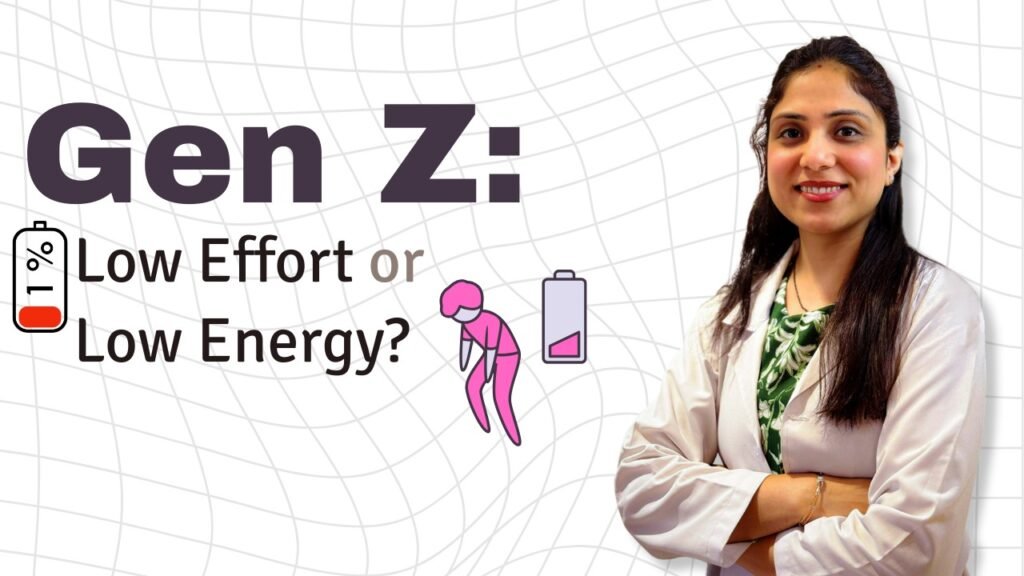
Is the “Genz Lazy” Stereotype True? A Psychiatrist’s Perspective on Motivation and Mental Resilience

Written by Dr. Sakshi (MBBS, MD Psychiatry) Psychiatrist | Mental Health Expert Let me begin with what I hear almost every week from patients’ parents, teachers, and even corporate HRs: “Dr. Sakshi, why is genz lazy?” “They just scroll Instagram all day and avoid responsibility.” “We used to work 12 hours without complaining — why can’t they?” As a psychiatrist deeply engaged with the youth of today, I find this narrative not only inaccurate—but harmful. We’re rushing to label a generation as genz lazy without understanding the emotional climate they live in, the mental health challenges they face, and the shifting values they uphold. Let’s explore this in detail—through the lens of science, psychology, and real human stories. Understanding the Label: “Genz Lazy” The phrase “genz lazy” is more of a societal assumption than a psychological truth.Yes, Gen Z may reject traditional career paths, resist 9–5 jobs, or appear disinterested in what we defined as “hard work.” But that doesn’t mean they lack drive. In psychiatry, motivation is a complex interplay of neurochemistry (dopamine levels), environment (stress levels), self-worth, and emotional safety. When I evaluate young adults clinically, I ask: Are they uninterested, or are they disengaged due to chronic stress?   Are they unmotivated, or are they emotionally depleted from toxic expectations?   Are they lazy—or are they mentally overwhelmed?   When people say genz lazy, they often ignore deeper emotional or psychological reasons. Gen Z vs Previous Generations: A Reality Check Let’s compare the backdrop Gen Z has grown up in versus the one their parents had: Factor Gen Z Gen X / Millennials Job market Stable, degree = job Saturated, unstable, skill > degree Media influence News, print, limited exposure 24/7 social media, war content, doomscroll Communication Face-to-face, structured Digital-first, hyper-connected Mental health talk Taboo, silent suffering Open conversations, therapy positive Success definition High-paying job, family Balance, freedom, emotional fulfillment So when you wonder “Is genz lazy?”—ask instead: “Are they responding differently to an entirely different world?” Inside the Mind: Mental Health in Gen Z I’ve met hundreds of Gen Z clients—from Delhi to Mumbai, from Tier-1 cities to small towns. The issues I frequently diagnose include: High-functioning anxiety masked as overachievement   Depression showing up as lack of energy or irritability   Sleep disorders due to digital overstimulation   Chronic decision fatigue (so many choices, yet no clarity)   Social withdrawal due to bullying, trolling, and unrealistic online comparison   When your brain is in survival mode, it doesn’t prioritize dreams or motivation. It conserves energy. This looks like genz lazy to outsiders—but it’s the brain’s coping mechanism. Why Motivation Looks Different in Gen Z Let’s decode it practically: They’re Purpose-Oriented, Not Process-Oriented They don’t want to “just work.” They want to contribute meaningfully. If they don’t see the “why,” they disengage. They Value Mental Peace Over Prestige High-paying job with toxic hours? Many will reject it. This isn’t laziness—it’s boundary setting. Hustle Culture Doesn’t Impress Them Previous generations wore burnout like a badge. Gen Z calls it out for what it is: exploitation. Instant Gratification Culture Affects Focus Constant dopamine hits from reels, likes, and messages rewire the brain. This results in lower attention span and impatience with long-term goals. What some label as genz lazy is often just a refusal to subscribe to broken systems. Is It Laziness or Learned Helplessness? Learned helplessness is a psychological condition where individuals stop trying because repeated failures or lack of control have trained them to believe “nothing works.” Many Gen Z adults feel like this: “Jobs are scarce. Degrees don’t help. AI is replacing us.” “No matter how much I study, I’m not good enough.” “There’s always someone better online. Why bother?” This is not genz lazy—it’s demoralization. And it needs healing, not shaming. Real Case: A Patient Who Seemed “Lazy” Let me share an anonymized case. Riya, 22, was brought to me by her mother. “She’s always in bed, doesn’t want to study or apply for jobs. She has no motivation,” her mother said. On the surface, yes—it looked like genz lazy. But after two sessions, we uncovered: Riya had social anxiety and was scared of rejection.   She had failed a competitive exam and hadn’t emotionally processed it.   She had been cyberbullied during college and lost confidence.   She didn’t need a lecture. She needed therapy, emotional support, and reassurance. Today, she’s studying psychology—and wants to become a therapist herself. How Society Contributes to the “Genz Lazy” Tag Instead of supporting emotional regulation, society keeps: Rewarding only visible productivity   Comparing individuals constantly   Ignoring burnout signs in youth   Invalidating emotional struggles with “we had it tougher”   These patterns reinforce the genz lazy stereotype and create internalized shame—which is the opposite of motivation. How Society Contributes to the “Genz Lazy” Tag If you’re a parent, teacher, or employer, here’s how to shift the conversation: Normalize Therapy Encourage mental checkups and emotional wellness just like physical health.   Validate Without Dismissing Don’t say “When I was your age…” Say “I see this is hard for you. Want to talk about it?”   Encourage, Don’t Push Gen Z thrives when mentored, not micromanaged.   Teach Real-Life Coping Skills Instead of pressuring grades, teach time management, resilience, mindfulness, and financial literacy.   Breaking the genz lazy myth starts with compassion—not correction. For Gen Z Reading This Let me talk to you directly: You are not lazy. You’re not weak. You’re adapting to a world that keeps shifting beneath your feet. That’s exhausting. But you’re also: -> Emotionally aware -> Unafraid to call out toxic norms -> More inclusive than any generation before -> Creatively gifted beyond imagination You don’t lack motivation—you lack environments that nurture it. So if you ever feel the weight of the genz lazy label—remember, that’s not your identity. That’s a misunderstanding of your reality. Final Thoughts from Dr. Sakshi “Why is genz lazy?” As a psychiatrist, I’ve come to believe—this question is outdated. The better question is: “How can we

self diagnosing
MENTAL HEALTH MYTHS & FACTS

Gen Z and the Self Diagnosing Spiral: A Psychiatrist’s Perspective

Written by Dr. Sakshi (MBBS, MD Psychiatry) Psychiatrist | Mental Health Expert In the age of YouTube shorts, Reddit threads, and Instagram reels, Gen Z is more connected to information than any generation before. They are digital natives who grew up Googling symptoms, watching mental health influencers, and engaging with self-care trends. While access to mental health information has empowered many, it’s also led to a concerning trend: the rise of self diagnosing. As a psychiatrist, I often meet young adults who walk into my clinic convinced they have ADHD, autism, bipolar disorder, or some other condition. Many have already labeled themselves based on a video they watched or a quiz they took online. While raising awareness is crucial, the overreliance on social media to self diagnose complex conditions can be misleading, and even harmful. The Rise of Self-Diagnosing Culture Gen Z prides itself on emotional openness and destigmatizing mental health conversations. They speak freely about anxiety, trauma, and neurodivergence. However, in this openness lies a new risk: the normalization of self diagnosing without clinical evaluation. Platforms like Instagram & youtube have millions of videos tagged #ADHD or #autism, where creators share symptoms or “relatable signs” that viewers often internalize. This trend, while well-intentioned, has blurred the lines between clinical reality and online content. Why Is Gen Z Self-Diagnosing? Several reasons fuel this phenomenon: Accessibility to Information: Social media and mental health blogs provide instant access to symptoms and diagnostic criteria, often oversimplified. Long Wait Times for Care: In many regions, it takes months to see a mental health professional. Self-diagnose autism or self-diagnose ADHD searches become an attempt to find answers during the wait. Validation and Belonging: Finding a label that explains one’s struggles can offer comfort and community. Gen Z often seeks spaces where they feel seen and heard. Influencer Culture: When favorite influencers talk openly about their mental health conditions, followers are more likely to compare themselves or adopt similar identities. The Problem with Self-Diagnosing Mental Disorders Although seeking self-awareness is not inherently wrong, there are significant pitfalls to self diagnosing mental illnesses: Misdiagnosis: Symptoms of different mental disorders often overlap. For example, lack of focus may suggest ADHD but could also stem from trauma, depression, or anxiety. Without a professional evaluation, self-diagnosis risks incorrect labeling. Over-pathologizing Normal Experiences: Many TikTok videos describe everyday traits (like disliking loud noises or zoning out) as signs of disorders. This may lead people to believe they are mentally ill when they’re simply human. Avoiding Professional Help: Once individuals are convinced they have a condition, they may resist seeing a doctor or therapist, believing they already have answers. Medication Misuse: Some may push for prescriptions based on self-diagnosis or even self-medicate, which can be dangerous. Understanding ADHD and Autism: Why You Shouldn’t Self Diagnose Conditions like ADHD and autism exist on a spectrum. While it’s common to self diagnose ADHD after watching someone describe executive dysfunction, or to self diagnose autism due to social difficulties, these disorders require in-depth assessments, developmental history, and clinical observation. A 60-second reel cannot capture the complexity of neurodivergence What Gen Z Can Do Instead Use Social Media as a Conversation Starter, Not a Diagnostic Tool: It’s okay to resonate with a post, but don’t assume that it confirms a diagnosis. Use it as a prompt to explore your mental health more deeply with a professional. Take Professional Mental Health Screenings: Platforms like Psychology Today or licensed mental health websites offer preliminary self diagnosing tools that are more reliable than viral content. Consult a Psychiatrist or Therapist: Only a licensed mental health professional can provide a formal diagnosis and recommend a treatment plan. Stay Curious, Not Categorical: It’s okay to not know what you’re going through. Focus on the symptoms rather than labeling them prematurely. A Psychiatrist’s Final Word Mental health awareness is a great leap forward. Gen Z is breaking stigma and encouraging peers to talk about their struggles. But awareness must walk hand-in-hand with accuracy. Self diagnosing based on social media can give false comfort, breed misinformation, and delay effective care. If you think you might have a mental health disorder, the best thing you can do is schedule a consultation. Diagnosis is not just about labels — it’s about understanding your mind and finding real, effective support. Conclusion The digital age is redefining how we understand mental health. While Gen Z’s willingness to explore emotional wellness is commendable, it’s essential to ensure that exploration is grounded in science, empathy, and professional guidance. Self diagnosing, whether to self diagnose autism or self diagnose ADHD, may feel empowering in the moment, but long-term mental health requires more than hashtags. Consult with Dr. Sakshi Practicing at: Diagnomind Clinic, BLK Max Hospital, Indian Spine Institute, and Primus Super Speciality Hospital Online Consultations Available  DM @drsakshi_psychiatrist or call to book your session 1. Is ADHD a mental illness? Yes, ADHD (Attention Deficit Hyperactivity Disorder) is considered a mental illness and a neurodevelopmental disorder. It affects attention, impulse control, and executive functioning. ADHD is recognized as a legitimate mental disorder illness by mental health professionals and requires proper diagnosis and treatment. If you suspect ADHD symptoms, taking a professional mental illness test is recommended. 2. Is anxiety a mental illness? Yes, anxiety can be classified as a mental illness when it becomes chronic and disrupts daily life. Generalized Anxiety Disorder, Panic Disorder, and Social Anxiety Disorder are examples of serious mental illnesses under the anxiety spectrum. While occasional stress is normal, persistent anxiety may indicate a need for mental health support. Consulting a psychiatrist or therapist can help assess whether you are mentally ill and require intervention. 3. Is depression a mental illness? Absolutely. Depression is a common yet serious mental illness that affects mood, energy, and motivation. It’s more than just sadness — it can impact physical health, relationships, and work. If you’re feeling persistently low or emotionally numb, you may be experiencing a mental disorder illness like clinical depression. A mental illness test or psychiatric consultation

Social Media and Mental Health
MENTAL HEALTH MYTHS & FACTS

Social Media and Mental Health: A Psychiatrist’s View by Dr. Sakshi

Written by Dr. Sakshi (MBBS, MD Psychiatry) Psychiatrist | Mental Health Expert In today’s digital-first world, social media is not just a tool — it’s a lifestyle. From reels and tweets to stories and threads, we’re more connected than ever. But at what cost? As a practicing mental health doctor and psychiatrist across Delhi NCR, Chandigarh, and online India-wide, I, Dr. Sakshi, have seen firsthand how social media and mental health are deeply intertwined. The same platforms meant to entertain and connect us can also be the very cause of rising anxiety, burnout, and emotional confusion — especially in Gen Z. How Social Media is Fueling Gen Z’s Mental Health Crisis At my clinics in Diagnomind, BLK Max, and Primus Hospital, I regularly consult young adults overwhelmed by the constant noise of the internet. Many suffer from low self-esteem, poor sleep, academic fatigue, and emotional dysregulation — all subtly linked to excessive screen time. Social media and mental health often collide in complex ways: while it offers validation, it also robs users of peace and balance. Can Social Media Really Cause Mental Health Issues? Yes — and no. Social media doesn’t directly ‘cause’ mental illness, but it contributes to unhealthy behavioral and emotional patterns. Constant comparison, fear of missing out (FOMO), and the pressure to appear perfect 24/7 all lead to chronic stress and dissatisfaction. This dynamic between social media and mental health creates a fertile ground for anxiety and low mood. Therapy can help untangle these issues and build resilience. The Complex Relationship Between Social Media and Mental Health It’s a paradox. Platforms like Instagram can be supportive spaces — yet they can also magnify distress. As a psychiatrist, I help patients set digital boundaries and reframe their online experience in a healthy, mindful way. Understanding the relationship between social media and mental health is key to using it without losing ourselves. Student Mental Health and Digital Burnout Among students, I see an alarming pattern: poor sleep, identity crises, and academic exhaustion. Social media and mental health in students is a growing area of concern. Social media offers escape, but often blurs the line between break and burnout. Early intervention and structured therapy help students rebuild emotional stamina and rediscover focus. Are Gen Z More Open — or Misusing Mental Health Terms?​ While it’s heartening to see Gen Z more vocal about mental health, there’s a flip side: overuse and misuse of clinical terms. Words like ‘OCD’, ‘depression’, or ‘trauma’ are often used casually, diluting their seriousness. When it comes to social media and mental health, misinformation can spread fast. As a mental health expert, I believe education and awareness must go hand-in-hand. My Approach: Therapy for Everyone, Not Just “Serious Cases” Therapy is for anyone navigating stress, transitions, relationship issues, or just wanting more clarity. Mental health is not a trend — it’s a foundation. And help doesn’t begin with crisis — it begins with m  conversation. Especially when it comes to social media and mental health, proactive care makes all the difference. Consult with Dr. Sakshi 📍 Practicing at: Diagnomind Clinic, BLK Max Hospital, Indian Spine Institute, and Primus Super Speciality Hospital 🌐 Online Consultations Available Pan-India 📩 DM @drsakshi_psychiatrist or call to book your session Can social media cause mental health issues? Social media doesn’t directly cause mental health disorders, but it can significantly contribute to them. Excessive use may lead to anxiety, depression, low self-esteem, sleep problems, and emotional burnout, especially in vulnerable individuals. The impact often depends on how it’s used and the user’s emotional resilience. How does social media affect mental health? Social media affects mental health both positively and negatively. On the one hand, it can provide community, support, and access to information. On the other, it can amplify feelings of inadequacy, promote unhealthy comparisons, and lead to digital fatigue. Balance and boundaries are essential to protect mental well-being. How many mental health issues are caused by social media? There is no fixed number, as social media alone doesn’t cause mental health issues — it contributes to them. However, research consistently links social media overuse to rising rates of anxiety, depression, body image concerns, sleep disorders, and attention problems, especially among teens and young adults. Is social media bad for mental health? Not inherently. Social media can be beneficial or harmful depending on how it’s used. Mindless scrolling, toxic comparisons, and cyberbullying can negatively affect mental health. However, conscious, purposeful use — like engaging with supportive communities — can enhance emotional well-being. What is the complex relationship between social media and mental health? The relationship between social media and mental health is paradoxical. It can be a source of connection, inspiration, and validation — but also a trigger for stress, FOMO, and emotional exhaustion. Its impact is shaped by content type, time spent, personal vulnerabilities, and how consciously it’s used.

Mental Health
MENTAL HEALTH MYTHS & FACTS

The Misuse of Mental Health Culture in Gen Z

Written by Dr. Sakshi (MBBS, MD Psychiatry) Psychiatrist | Mental Health Expert In today’s hyper-connected world, mental health has finally become a mainstream conversation — especially among Gen Z. From Reels that say “my anxiety be like…” to aesthetic breakdown posts on Tumblr, this generation is openly talking about emotions, trauma, and therapy like never before. But what happens when awareness turns into trivialization? As a practicing psychiatrist, I, Dr. Sakshi, have observed a growing misuse of mental health terms — leading many young people to believe: “Therapy is only for serious cases.” “You can self-diagnose from social media.” “Mental health = a vibe.” Let’s break that down. What Mental Health Really Means (And Why It’s Not Just a Trend) Mental health isn’t just the absence of illness — it’s the presence of emotional clarity, psychological resilience, and behavioral balance. It affects how we think, feel, act, and even how we relate to others. Unfortunately, digital culture sometimes confuses diagnosis with identity and awareness with aesthetics — a growing concern in genz mental health. At my practice at Diagnomind Clinic, and through consults at BLK Max Hospital, Primus Super Speciality Hospital, and the Indian Spine Institute, I meet Gen Z patients who are struggling with: Overuse of emotional wellbeing labels Fear of judgment in real psychological support Emotional burnout masked as “just a phase” How Social Media Affects GenZ Mental Health Social media has helped destigmatize mental therapy — and that’s a great thing. But as a psychological  doctor, I’ve also seen: Teens claiming they have OCD because they like neat notes People saying they have bipolar because of mood swings from lack of sleep Therapy being reduced to a motivational quote and a matcha latte As a psychiatrist, I always remind my patients:Emotional wellbeing is real healthcare. Emotional literacy is great, but professional evaluation is essential. Dr. Sakshi’s Approach to Psychological support – For Everyone, Not Just “Serious Cases” Mental health therapy isn’t a last resort — it’s preventive, restorative, and empowering. Here’s what we do at my practice:  Support with anxiety, depression, and OCD  Guidance for relationship stress and burnout  Tools for academic pressure, social disconnection, and trauma recovery I consult in-person across Delhi, Gurugram, Chandigarh, and offer online consultations across India — making emotional support support accessible and stigma-free. Misconceptions Gen Z Has About Therapy Myth Truth “Therapy is only for broken people.” Psychological support therapy is for anyone seeking emotional clarity and growth. “I have to hit rock bottom first.” You can start therapy proactively — even during mild distress. “If I’m not diagnosed, I don’t need therapy.” Early psychological support prevents deeper issues later. FAQs – From Gen Z Patients I Meet Often What mental health disorder do I have? As a psychiatrist, my role is to diagnose, treat, and help prevent mental health conditions. I focus on understanding the emotional, behavioral, and psychological issues you may be facing. With a combination of therapy, medication management, and personalized care, I aim to help you achieve emotional stability and overall well-being. Are mental health disorders genetic? Yes, conditions like anxiety and depression can be inherited — but lifestyle and emotional stress play major roles. How does social media affect mental health? It can both raise psychological support and worsen symptoms through comparison, misinformation, and sleep loss. How does social media affect mental health in students? Students face high levels of anxiety, FOMO, and identity confusion from curated, unrealistic content. What is the relationship between social media and GenZ mental health? It’s paradoxical. Platforms offer support communities but also amplify anxiety, stress, and low self-worth. Are Gen Z more open about mental health? Yes — they’ve pioneered a new wave of psychological support, but often lack real education and context. Are Gen Z becoming more health conscious? Absolutely. They embrace holistic wellness but need trusted voices to filter through digital noise. What is the psychology of Gen Z? They value authenticity, inclusivity, and emotional literacy, but struggle with stress, isolation, and online fatigue. Final Thoughts from Dr. Sakshi Mental health is not a trend. It’s not content. It’s not a vibe. It’s health — and it’s as real as your heartbeat. Whether you’re silently struggling or just unsure how to feel — know this: 💬 Help exists. 🧠 Psychological support is valid at every stage. 📍 And your journey can begin with a conversation. Ready to Take the First Step? Dr. Sakshi is currently consulting at: Diagnomind Clinic BLK Max Super Speciality Hospital Indian Spine Institute Primus Super Speciality Hospital 🌐 Online Consultations Available Across India 📩 DM @drsakshi_psychiatrist or call to book your session. 💜 Let’s normalize mental health awareness and end the stigma around seeking help

Clearing Misconceptions
MENTAL HEALTH MYTHS & FACTS

Clearing Misconceptions, Creating Awareness

Written by Dr. Sakshi (MBBS, MD Psychiatry) Psychiatrist | Mental Health Expert Mental health is an essential part of our overall well-being—yet it remains one of the most misunderstood areas of healthcare. For far too long, misconceptions and societal stigma have clouded open conversations, leaving many to suffer in silence or delay seeking help. As a psychiatrist, I often see how misinformation not only misguides people but also prevents them from accessing the care they genuinely need. That’s why it’s important to debunk these myths with facts—rooted in science, compassion, and real-life understanding. Let’s explore some of the most common mental health myths and uncover the truth behind them. Myth 1: Mental health problems aren’t real illnesses. Fact: Mental health conditions are medical illnesses—just like diabetes or high blood pressure. They have biological, genetic, psychological, and environmental factors. They are diagnosed by professionals and can be treated with therapy, medication, or both. Myth 2: Therapy is only for people with “serious” problems Fact: Therapy is for everyone. You don’t have to be in crisis to seek support. Whether you’re facing stress, relationship issues, self-doubt, or burnout, therapy helps you gain clarity, strengthen coping skills, and grow emotionally. Myth 3: People with mental health conditions are weak. Fact: Struggling with mental health has nothing to do with strength or character. In fact, seeking help takes immense courage. Mental illness can affect anyone—regardless of age, status, or lifestyle. It’s a health issue, not a personal flaw. Myth 4: Antidepressants and psychiatric medications change your personality. Fact: Psychiatric medication is scientifically designed to stabilize mood, not erase your personality. When prescribed correctly, it helps balance brain chemicals, reduce symptoms, and improve functionality. It allows you to feel more like yourself—not less. Myth 5: Mental health issues are rare. Fact: Mental health disorders are more common than you think. According to the World Health Organisation (WHO), 1 in 8 people globally live with a mental health condition. That means you’re never truly alone—and support is always within reach. Myth 6: Children and teens don’t experience mental health issues. Fact: Mental health challenges can begin early in life. From anxiety and ADHD to depression and trauma—young minds are vulnerable too. Early intervention helps children and teens grow into emotionally healthy adults. Myth 7: Talking about mental health makes things worse Fact: Silence fuels stigma. Talking about mental health openly reduces shame, encourages connection, and opens the door to healing. Mental health conversations are empowering, not harmful. Myth 8: If someone looks okay, they must be okay. Fact: Mental illness isn’t always visible. People often mask pain behind smiles or productivity. That’s why it’s crucial to check in with loved ones, even if they seem fine on the outside. Myth 9: Meditation or exercise alone can cure mental illness Fact: While mindfulness and exercise are powerful tools, they are not substitutes for clinical care when it’s needed. Mental health often requires a multi-dimensional approach—therapy, lifestyle, medication, and support—all working together. Myth 10: People with mental health issues can’t work or live normally. Fact: With proper treatment and support, most people lead fulfilling, successful lives. They manage their condition just like any other chronic illness—with resilience, adaptability, and inner strength. Why Busting These Myths Matters Every myth we break is a step closer to normalizing mental health conversations. It helps create safe spaces—for yourself, for someone you love, for society at large.   When we replace judgment with understanding and fear with facts, we make it easier for people to ask for help without shame. From My Practice as a Psychiatrist I often meet individuals who waited years to seek help because of these deeply rooted myths. Once they find the right guidance, they realise how liberating, healing, and transformative psychiatric care can be. Mental health treatment is not about labels. It’s about feeling heard, regaining balance, and building the life you deserve—one step at a time. Let’s Talk Mental Health, Without Myths. If you’re navigating emotional challenges or simply need a space to breathe and be heard—know that you’re not alone. The first step toward healing is often clarity. Let’s replace myths with understanding, and stigma with support. Because mental health is health. And you matter.

Scroll to Top
Call Now Button